


 infos-pistes
 meteo
meteo webcams
A triple climb for the 2026 edition
In 2026, the Tour de France returns to the Alpe d’Huez and in force with two stages at stake, for the first time ever!:
-the 24 July (stage 19) : Departure from Gap. Arrival at Alpe d’Huez by the climb of the 21 bends
– July 25 (stage 20) : Departure from Bourg d’Oisans. Arrival at the Alpe d’Huez by the Col de Sarenne
Upstream, the Alpe d’Huez hosts another major cycling event: L’Etape du Tour de France, a demanding challenge and surely the most difficult Etape du Tour de France in recent years. On 19 July, 16,000 participants will set off from Bourg d’Oisans for 170 km of racing and 5,400 m of elevation gain. After the Col de la Croix de Fer, the Col du Télégraphe and the Col du Galibier they will arrive at the Ape d’Huez via the Col de Sarenne.
The Tour de France, inseparable from the Alpe d’Huez
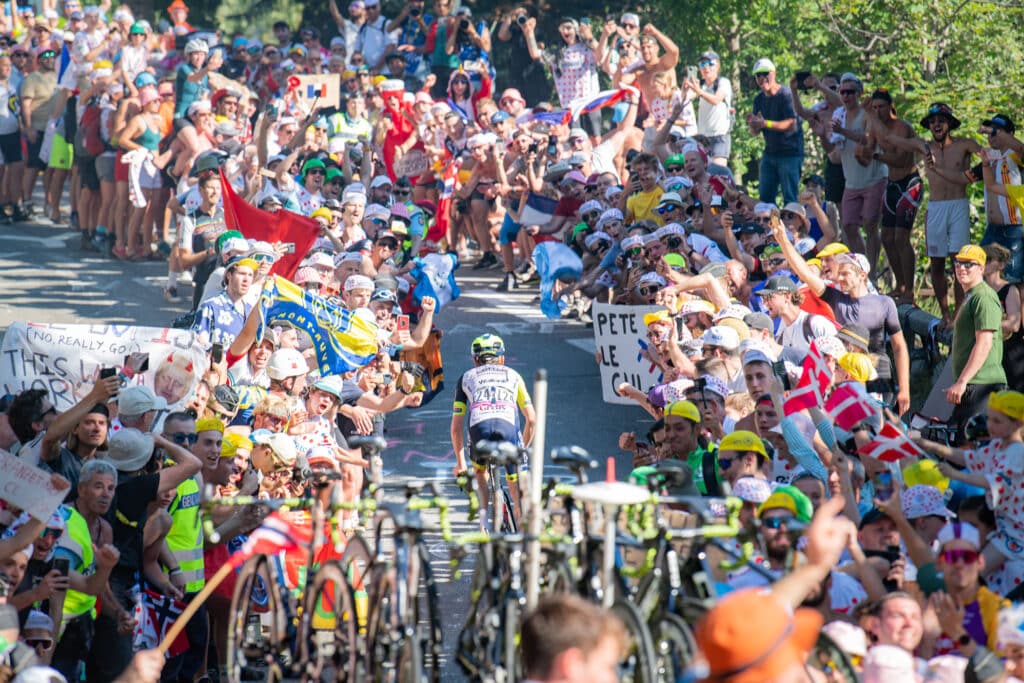
The history of the Tour de France is inseparable from that of our mountains. The Alpe d’Huez occupies a special place, both for its difficulty and for the popular fervour it evokes. The ascent of the 21 bends has become over the decades one of the strongest symbols of world cycling. Alpe d’Huez appears for the first time on the Tour de France route in 1952. That year, the Italian Fausto Coppi scored a historic victory there, alone, which marked the spirits and inaugurated the legend of the place. Since then, the climb, about 14 kilometers long with an average slope of more than 8%, is regularly on the program of the Grande Boucle. Its 21 numbered corners, each bearing the name of a stage winner, have become iconic.
Over the years, the Alpe d’Huez has been the scene of mythical moments. Champions like Jacques Anquetil, Eddy Merckx, Bernard Hinault, Marco Pantani or even Miguel Indurain wrote part of their legend there. Alpe d’Huez is also famous for its unique atmosphere. Hundreds of thousands of spectators from all over the world line the road and transform the climb into a real open-air stadium. The Dutch supporters, particularly numerous, have even earned Turn 7 the nickname of “Dutch Turn”, as their presence and encouragement are spectacular at this place all dressed in orange for the occasion.


 infos-pistes
 meteo
meteo webcams